
Skincare
Our First Day Spa Visit in Houston: What to Expect, Start to Finish
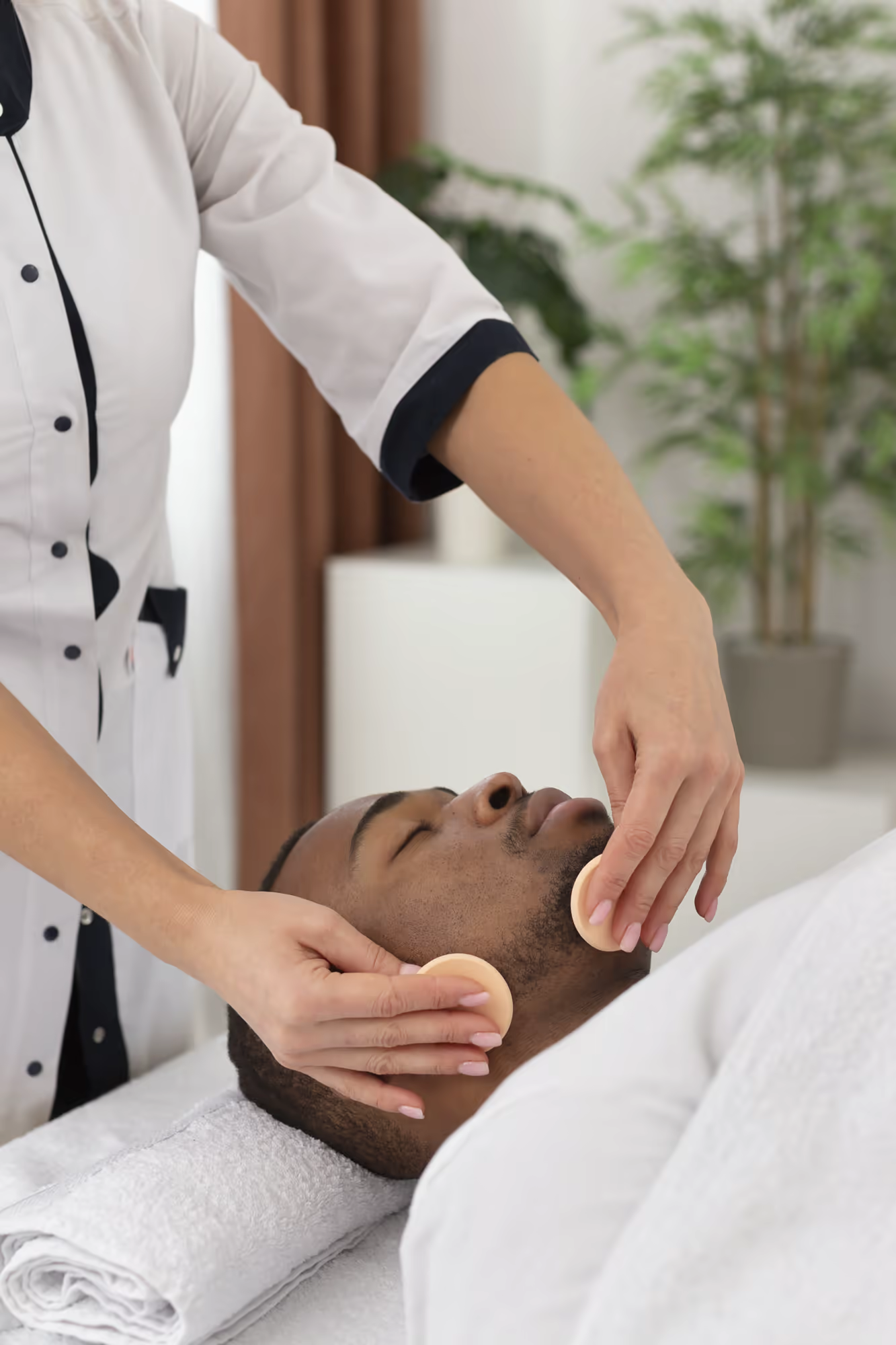
If you’ve never been to a day spa in Houston — or it’s been years since your last one — the not-knowing is usually the worst part. Not the treatment itself, the logistics around it: what to wear, when to arrive, whether you’re supposed to make conversation, what happens if you fall asleep on the table. Here’s the whole thing, start to finish, including the parts nobody tells you.
Booking your first appointment
Book online or call — for a first visit, calling has one real advantage: you can describe what’s going on and let the person booking suggest the right treatment and length, rather than guessing from a menu of names you’ve never heard before. If you’re not sure whether you want a facial or a massage, say so. That’s a completely normal thing to not know.
When you book, mention anything relevant: pregnancy, injuries, allergies, skin conditions, or if you’re booking around a specific event like a wedding. It changes what’s actually recommended, and it’s much easier to plan for upfront than adjust for on the day.
What to wear
Whatever you’re comfortable arriving and leaving in — you’ll be changing regardless of what you booked. Loose, easy clothing is simpler to get back into afterward, particularly after a massage when you might feel a little slow-moving for a few minutes. If you’ve booked a facial, skip heavy makeup; you’d be removing it anyway, and it just adds time to your appointment.
What to bring
Yourself, a payment method, and — if it’s relevant — a written note of any medications or medical history you might not remember perfectly under a bit of first-visit nerves. Leave valuables at home or in the car. There’s nothing else you need to bring; towels, robes and everything used during treatment are provided.
What actually happens, step by step
You arrive and check in. Come in ten minutes before your appointment. You’ll fill out a short intake form covering health history, any injuries or conditions, skin concerns, and how much pressure you generally prefer. It takes a couple of minutes, and it’s the reason your treatment gets tailored to you instead of run from a script.
A quick conversation. Your therapist or esthetician reads through the form, then asks a few follow-up questions. This is genuinely the moment to mention the thing you were planning to stay quiet about — the shoulder that’s been bad for months, the skincare product that broke you out, the fact that you don’t love having your feet touched. None of it is an unusual thing to say.
You’re shown to the room. You’ll be left alone to undress to your own comfort level and get onto the table under the sheet or towel provided. Take whatever time you need. Your therapist knocks before coming back in, every single time.
You’re shown to the room. You’ll be left alone to undress to your own comfort level and get onto the table under the sheet or towel provided. Take whatever time you need. Your therapist knocks before coming back in, every single time.
The treatment itself. You stay covered throughout the entire treatment — only the specific area being worked on is uncovered at any point, and it’s re-covered before your therapist moves to the next area. Pressure gets checked early on, and you can adjust it at any time by simply saying so. Talking is entirely optional. Plenty of people doze off partway through, and that’s read as a compliment, not a problem.
Coming back to yourself. At the end, you’re left to get dressed unhurried. It’s completely normal to feel a little spacey or slow for a few minutes afterward — that’s your body settling back down, not anything to worry about. Water helps.
Aftercare, not upselling. Your therapist will tell you what they noticed and what might help going forward — more water, a stretch, a particular product, or simply coming back in a few weeks. If the honest answer is that you don’t need anything else, that’s what you’ll hear. Nobody is working from a sales quota.
How long should I actually set aside?
Add about twenty minutes on top of your booked treatment time, for check-in, changing, and not feeling rushed on the way out. A 60-minute massage is realistically closer to an hour and a half of your actual day once you account for arriving early and not sprinting back to your car afterward. Don’t book a spa appointment directly before something time-sensitive.
The questions people are too polite to ask
Do I have to take everything off?
No. You undress to your own comfort level, and plenty of people keep underwear on throughout. You’re covered by a sheet or towel for the entire treatment regardless of what you’ve chosen to remove.
Am I supposed to make conversation?
Only if you want to. Some people talk the whole way through, others go quiet after the first two minutes — both are completely normal. If you’d rather not talk, just say so; nobody takes it personally.
What if I fall asleep or snore?
It happens constantly, and therapists genuinely read it as one of the better compliments they get. Nobody wakes you unless they need you to shift position.
What if I don't like the pressure?
Say something immediately, at any point in the treatment — “a little lighter” or “a bit firmer” is all it takes. Lying there enduring pressure you don’t like is the single most common way people waste a treatment, and your therapist can’t read your mind.
Do I need to be freshly shaved, waxed, or otherwise "prepared"?
No, not for a massage or facial. Nobody is checking, and nobody cares. (Waxing is the one exception where recent shaving actually makes the treatment harder, not easier — don’t shave right before a wax appointment.)
Will someone try to sell me products on the way out?
Not with any pressure. If something would genuinely help — a specific home-care product, a follow-up treatment — you’ll be told honestly. If the answer is that you don’t need anything, that’s what gets said instead.