
Skincare
HydraFacial vs. a regular facial: which one do you actually need?
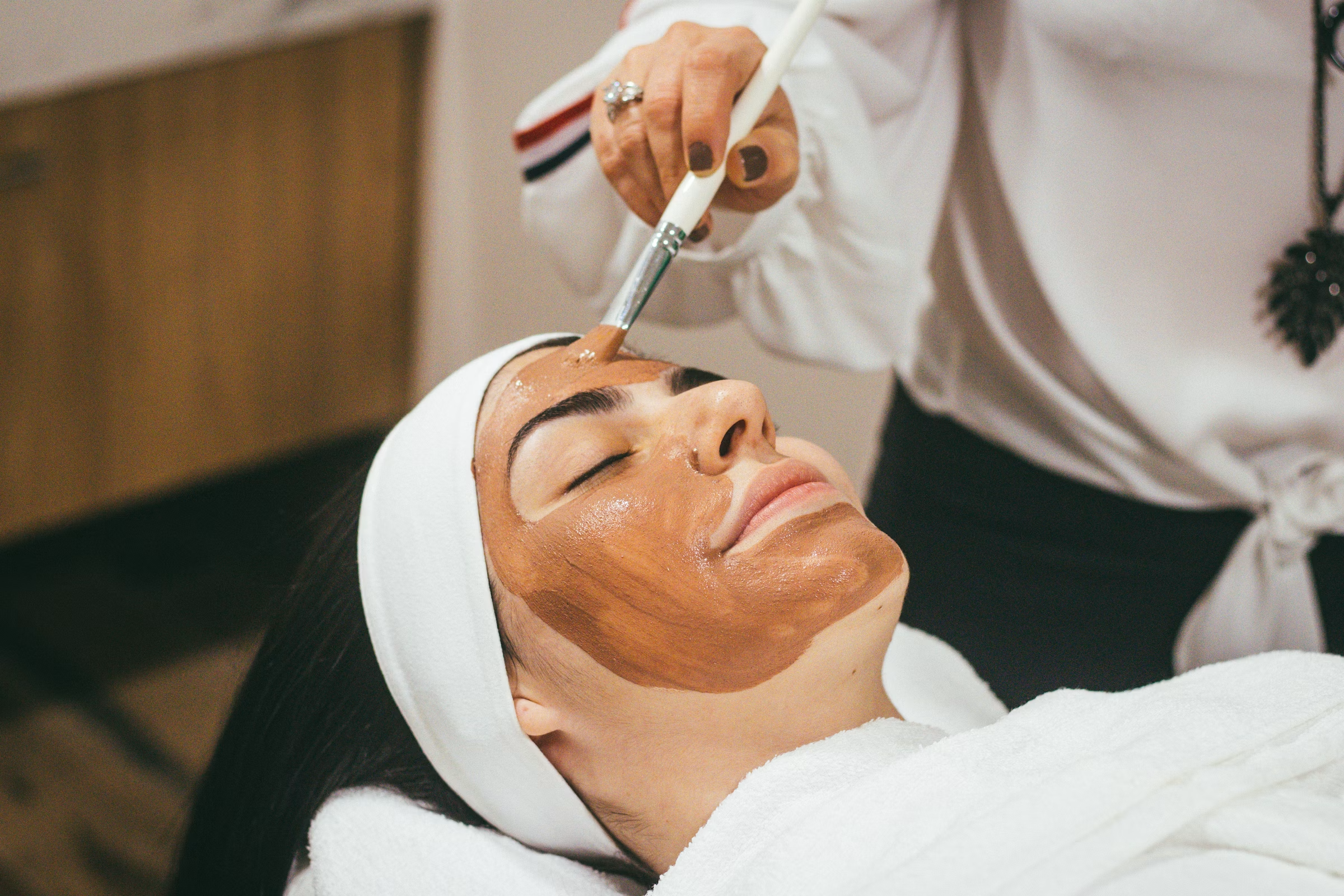
It’s the question we field most often at the front desk of our day spa in Houston: someone has been getting facials for years, has heard about HydraFacials, and wants to know whether the newer treatment is genuinely better or just better marketed.
The honest answer is that they do different jobs, and one of them is a much safer bet if you have somewhere to be on Saturday. Here’s how we actually decide in the treatment room.
The short answer
If you want predictable glow with no recovery time, book a HydraFacial. If you want a relaxing, tailored hour where an esthetician works on your skin by hand and adapts as they go, book a classic facial.
Neither is a beginner or advanced version of the other. We have long-standing clients who alternate between the two depending on what’s happening that month.
What a classic facial actually does
A traditional facial is manual work. At our spa in Montrose, a signature or anti-aging facial generally runs through a cleanse, an exfoliation step, steam to soften the pores, hands-on extractions, a mask matched to what your skin is doing that day, and a facial massage before moisturiser and SPF.
The strength of that sequence is the esthetician. They can feel congestion you can’t see, spend longer on your chin than your cheeks, switch the mask halfway through, and work lymphatic drainage into the massage if you’re puffy. It is genuinely customised, and the massage element is why people fall asleep in the chair.
The trade-off is manual extraction. Squeezing congestion out by hand is effective, but it creates temporary redness, and if your skin is reactive that can last into the next day.
What a HydraFacial does differently
A HydraFacial uses a handpiece with a spiral tip and gentle vacuum suction. Instead of manual squeezing, it lifts debris out of the pore while simultaneously pushing serum in. The standard sequence is:
- Cleanse and peel — dead surface skin is loosened with a mild acid blend rather than scrubbed off.
- Extract and hydrate — suction clears the pores while a hydrating serum goes in behind it.
- Fuse and protect — antioxidants and peptides are applied to finish.
Because the suction is controlled rather than manual, the result is far more consistent from visit to visit, and the redness is usually gone before you reach the car. That is the entire reason it has become the standard pre-event treatment.
What it is not is a relaxing massage. It’s efficient, it’s a bit odd feeling the vacuum move across your face, and it’s over faster.
Which One Should You Book
If you have an event in the next few days, book the HydraFacial — it’s safe even one to two days out, while a classic facial is better booked five to seven days ahead so any redness has time to settle. If your skin is oily or congested, the suction-based extraction tends to work better and hurts less than manual extraction. If you want the hour itself to feel like a treat rather than a procedure, or your skin is dry and dull rather than congested, a classic facial is the better call.
One thing worth saying clearly: never book a first-time treatment the day before something important. That goes for both, and doubly for dermaplaning or a chemical peel, which resurface more aggressively and need real lead time. If you’ve never had a treatment with us before, we don’t know how your skin will respond to it yet, and a wedding morning is a bad time to find out.
Skin turns over roughly every four weeks, so monthly is the standard recommendation for either treatment — though we’d rather see you every eight weeks consistently than monthly for two visits and then never again. If budget matters, a package that pairs a facial with a massage usually works out cheaper than booking them separately, and gives you a reason to actually keep the appointment.
Common Questions
A few things people ask us often
Does a HydraFacial hurt?
For most people, no. It feels more like a cool brush with light suction than anything sharp, and it’s noticeably gentler than manual extraction.
Can I wear makeup afterwards?
After a HydraFacial, yes. Though your skin will look better without it for the rest of the day. After a classic facial with extractions, give it a few hours so the pores can settle.
Which is better for acne-prone skin?
It depends what kind. For congestion and blackheads, HydraFacial extraction is excellent and far less irritating. For active, inflamed breakouts, we’d want to look at your skin first — sometimes the right answer is a calming treatment now and resurfacing later. Book a consultation rather than guessing.
Is either safe during pregnancy?
Both can usually be adapted, but some active ingredients are avoided during pregnancy. Always tell us when you book so the esthetician can plan a safe version rather than adjusting on the day. The same applies to our prenatal massage.
Can I have a facial and a massage on the same day?
Yes, and it’s one of our most-booked combinations. Several spa packages pair them, and the pricing works out below booking each treatment on its own.